Stream data with Axiom
The Stream tab enables you to process and analyze high volumes of high-velocity data from a variety of sources in real time.
The Stream tab allows you to inspect individual events and watch as they’re ingested live.
It can be incredibly useful to be able to live-stream events as they’re ingested to know what’s going on in the context of the entire system. Like a supercharged terminal, the Stream tab in Axiom allows you to view streams of events, filter them to only see important information, and finally inspect each individual event.
This section introduces the Stream tab and its components that unlock powerful insights from your data.
Choose a dataset
The default view is one where you can easily see which datasets are available and also see some recent saved queries in case you want to jump directly into a stream:
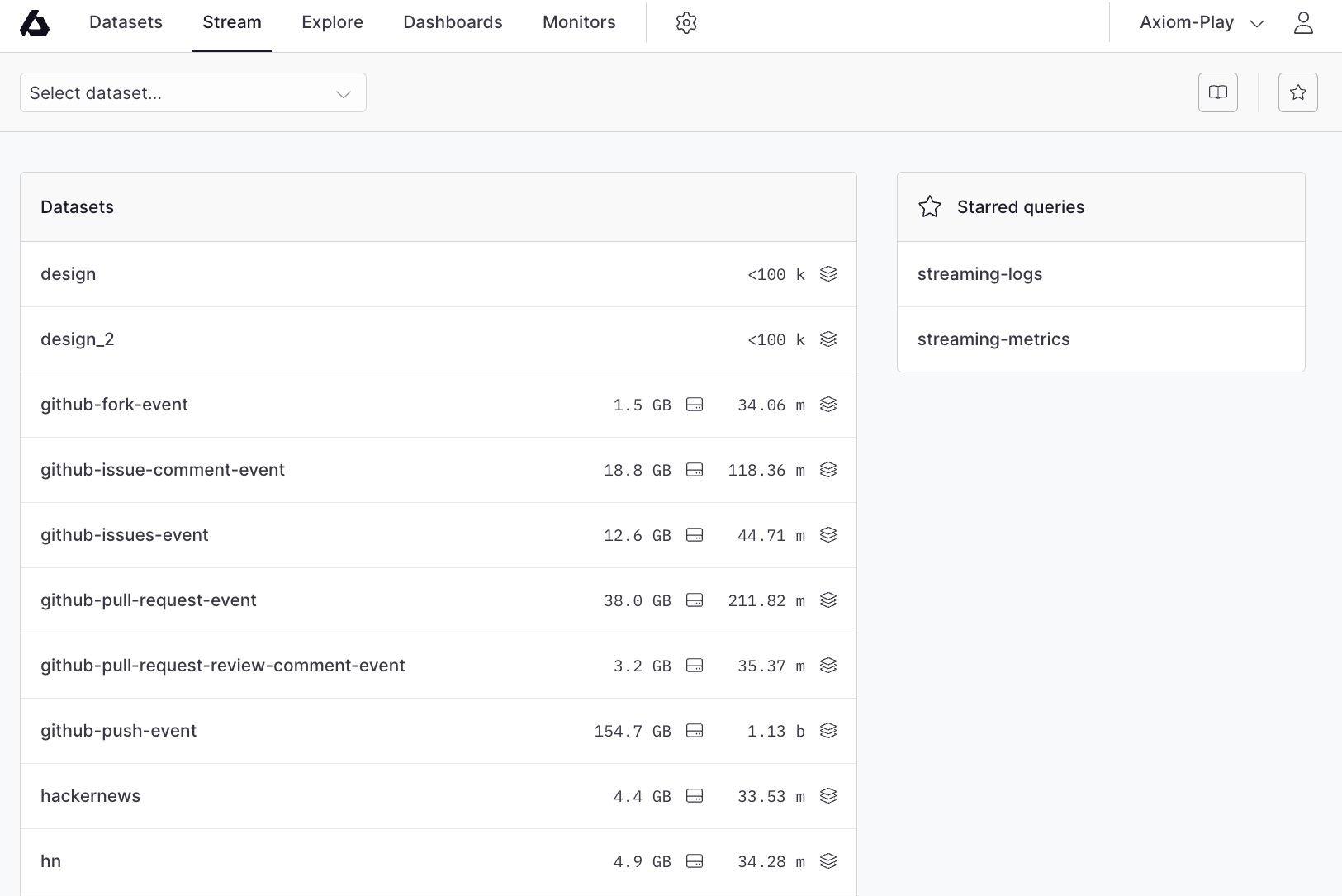
Select a dataset from the list of datasets to continue.
Event stream
Upon selecting a dataset, you are immediately taken to the live event stream for that dataset:
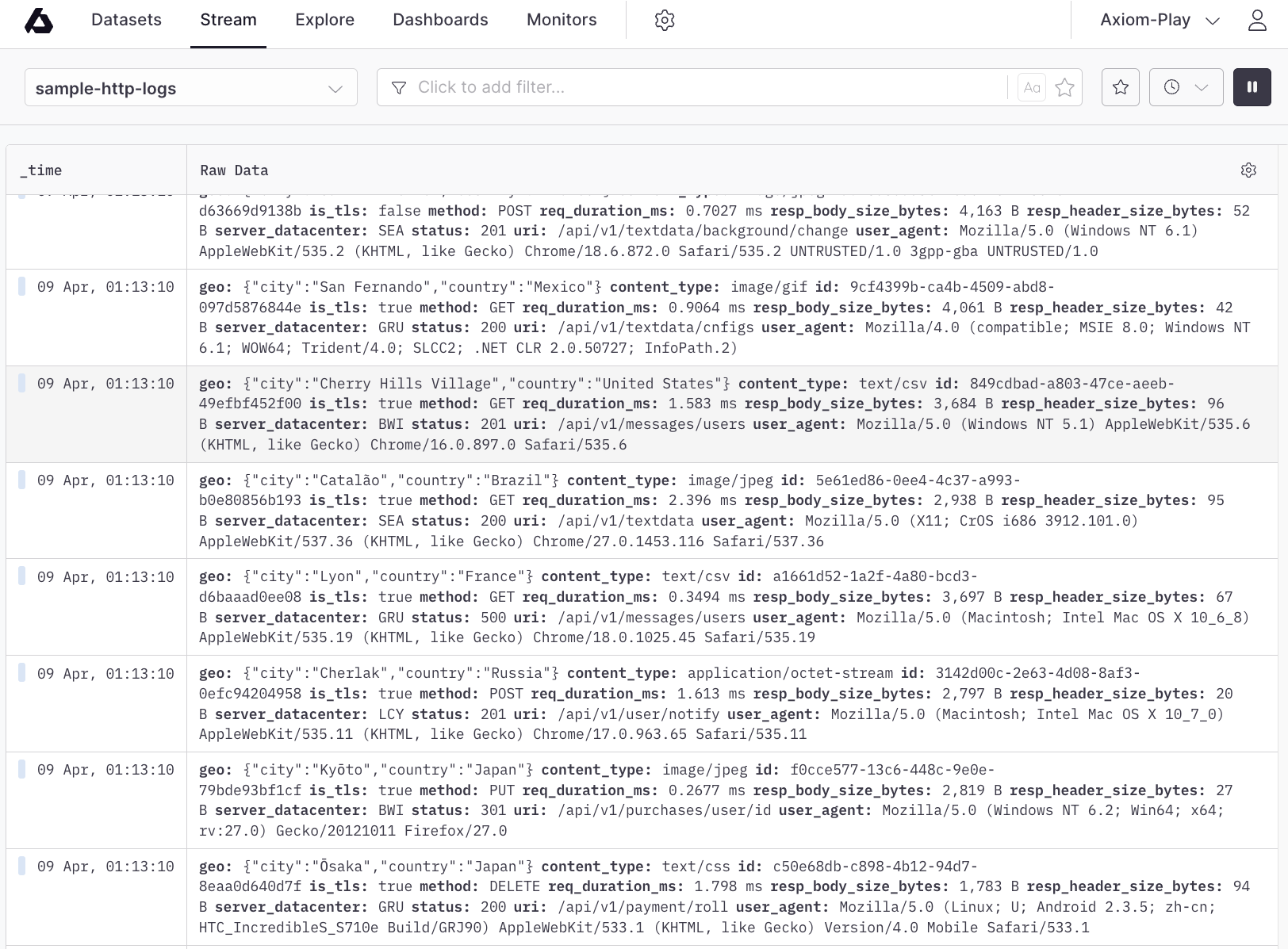
You can click an event to be taken to the event details slide-out:
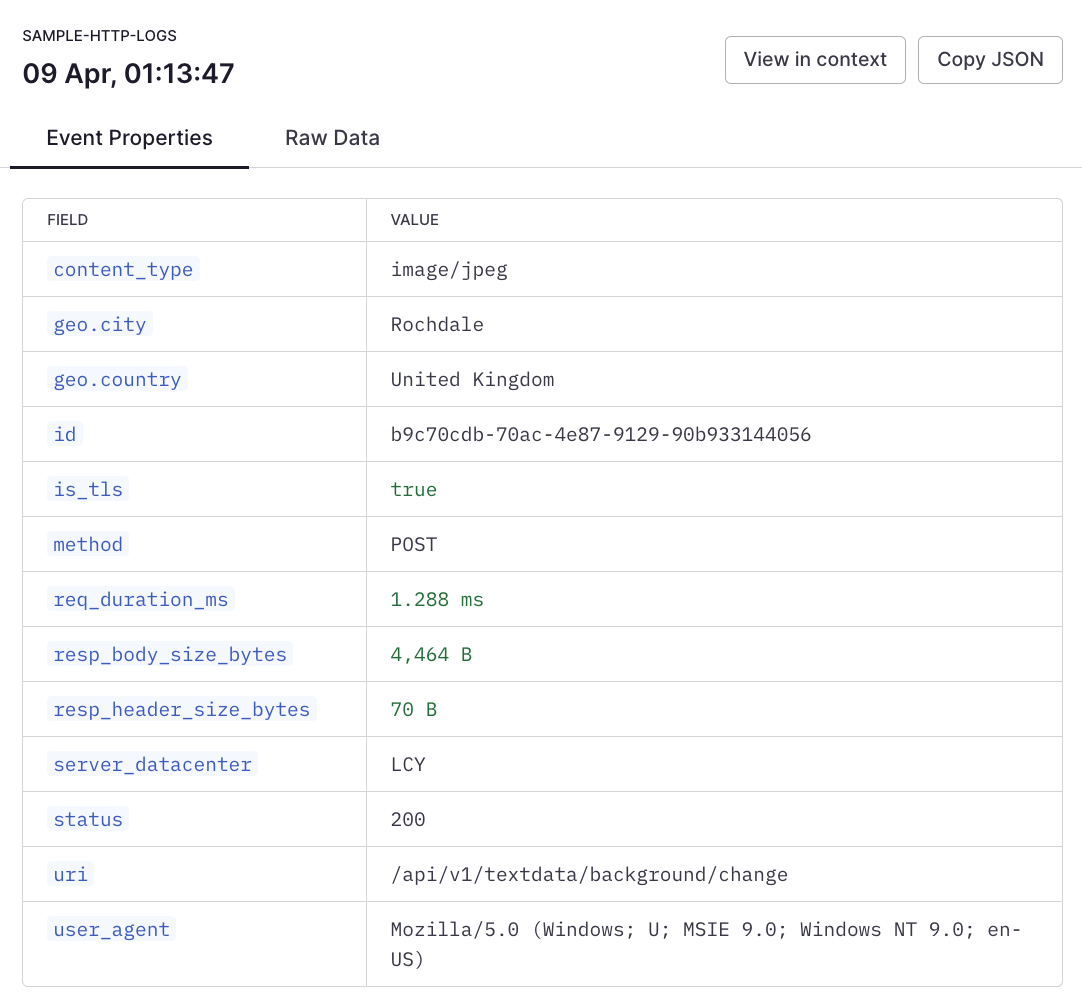
On this slide-out, you can copy individual field values, or copy the entire event as JSON.
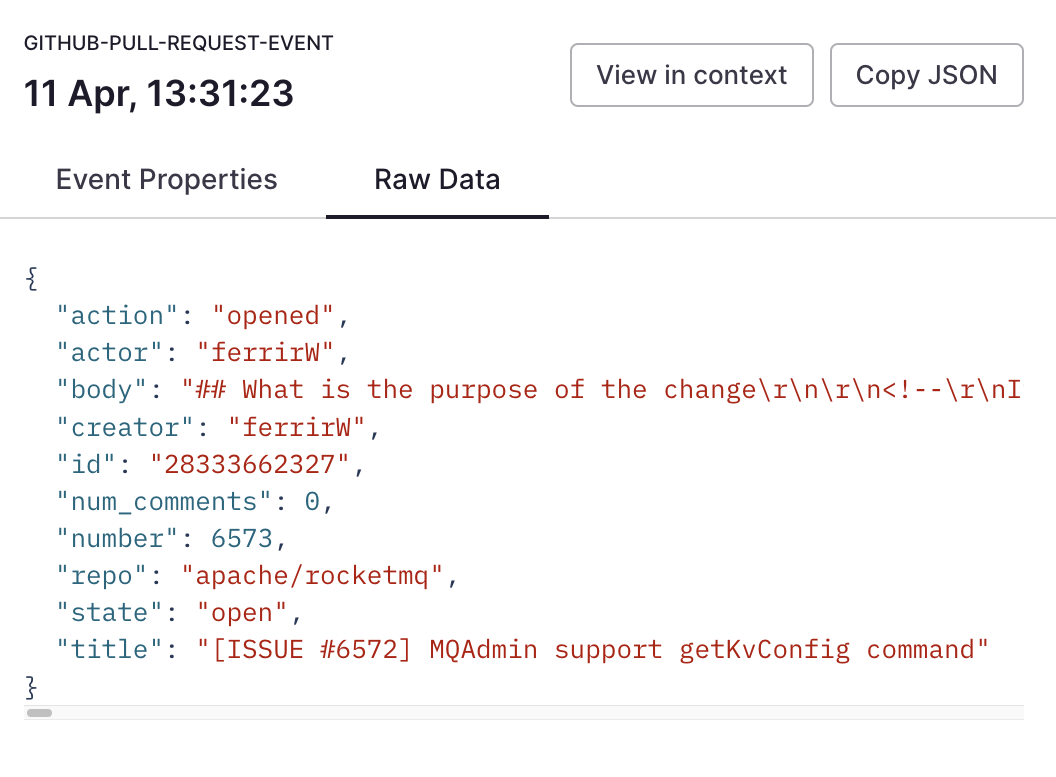
You can view and copy the raw data:
Filter data
The Stream tab provides access to a powerful filter builder right on the toolbar:
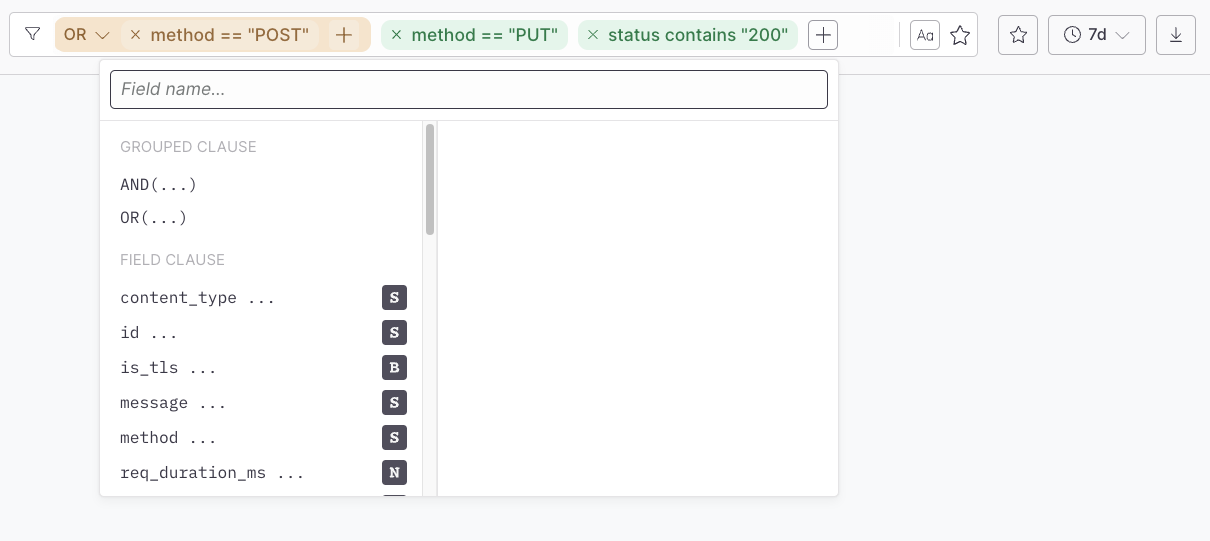
For more information, see the filters documentation.
Time range selection
The stream has two time modes:
- Live stream (default)
- Time range
Live stream continuously checks for new events and presents them in the stream.
Time range only shows events that fall between a specific start and end date. This can be useful when investigating an issue. The time range menu has some options to quickly choose some time ranges, or you can input a specific range for your search.
When you are ready to return to live streaming, click this button:
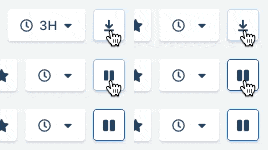
Click the button again to pause the stream.
View settings
The Stream tab is customizable via the view settings menu:
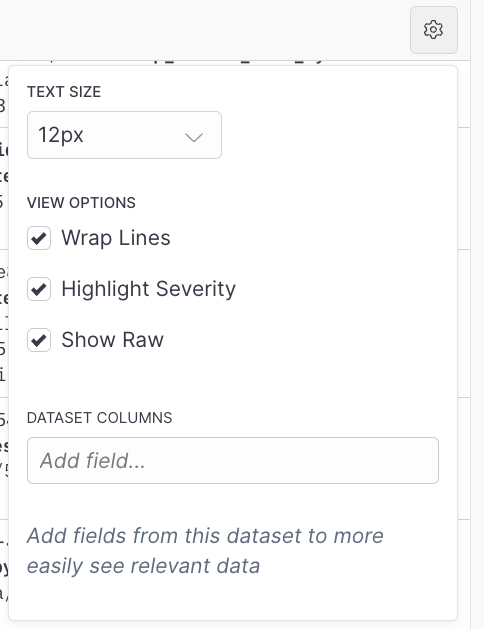
Options include:
- Text size used in the stream
- Wrap lines
- Highlight severity (this is automatically extracted from the event)
- Show the raw event details
- Fields to display in their own column
Saved queries
The saved queries slide-out is activated via the toolbar:
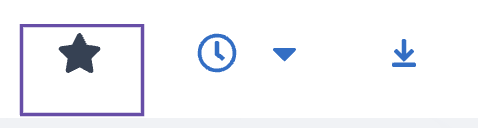
For more information, see Saved queries.
Highlight severity
Stream highlights log levels in different colors. For supported fields and detection rules, see Requirements for log level fields.
To turn on highlighting, click in the top right of Stream, and then select Highlight severity.
Hover over a severity marker to see the field and value that determined the level. In the event details, click the level badge to highlight the source field.